
Safe opening and repairs
Safe opening
and repairs
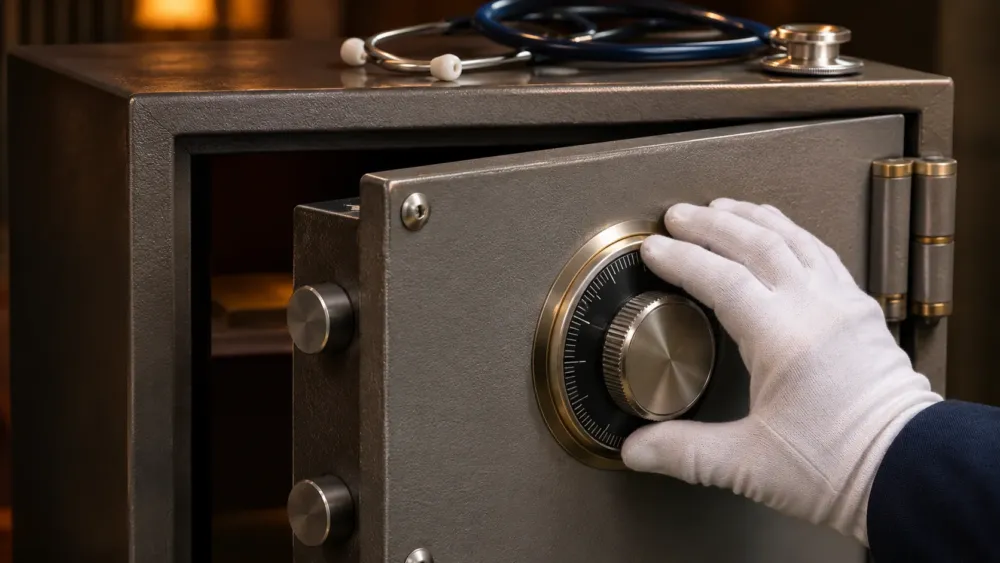
Locked out of your safe, forgotten the code or the keypad has died. We open home and business safes, reset combinations and repair the lock so the safe works again.
- MLA member
- Fully insured
- Open 24/7
- Card, cash, Clearpay or Klarna
Quick answer
Can a locksmith open a safe without damaging it?
Often, yes. We try non-destructive methods first. If drilling is the only way, we tell you why and agree the price before we start, and the safe can usually be repaired afterwards.
Checked November 2026 by East London Locksmith Ltd, a Master Locksmiths Association member.
Fault finder
Common safe problems and the usual fix
Find what is happening to you. If it is not here, call us and describe it: we will tell you what it needs and what it will cost.
Tap what is happening to see the usual cause and fix.
| What you notice | Usually the cause | What we do |
|---|---|---|
| Forgotten the code | Code lost or changed by someone else. | Opened, then a new code set. |
| Keypad dead or beeping | Flat batteries, or a failed keypad. | Batteries or keypad replaced, safe opened. |
| Lost the safe key | No spare key. | Opened and a new lock or key fitted. |
| Handle turns but the door will not open | Bolts stuck or the mechanism worn. | Mechanism repaired and tested. |
Forgotten the code
Usually: Code lost or changed by someone else.
Opened, then a new code set.
Keypad dead or beeping
Usually: Flat batteries, or a failed keypad.
Batteries or keypad replaced, safe opened.
Lost the safe key
Usually: No spare key.
Opened and a new lock or key fitted.
Handle turns but the door will not open
Usually: Bolts stuck or the mechanism worn.
Mechanism repaired and tested.
Safe opening
What we do
We use non-destructive methods first. If a safe has to be drilled, we tell you why and the price before we start, and repair it afterwards.
- Safe opening
- Forgotten combinations reset
- Electronic keypad faults
- Lost safe keys
- Bolt and mechanism repairs
- Safe servicing
What is included
- Price agreed before we start
- Non-destructive opening tried first
- Combination reset or new code set
- Electronic locks and keypads repaired
- Safe tested with you before we leave
Try this first
Forgotten code or dead keypad?
A few things to try before you call. None of them will harm the safe.
- Change the batteriesMost keypad faults are flat batteries. Many safes have an outside battery point or a backup key.
- Stop after a few wrong codesMany safes lock you out for a while after repeated wrong codes. Wait, then try again.
- Find the model and serial numberThey are often on a label or in the manual, and help us bring the right parts.
- Have proof it is yoursWe ask for ID and proof that the safe is yours, or that you are allowed to open it.
Good to know
The kinds of safe lock we work on
Tell us which one you have when you call.
- Key locksLost or broken keys, and locks that will not turn.
- Mechanical dialsForgotten combinations and dials that will not open.
- Electronic keypadsFlat batteries, dead screens and failed solenoids.
- Bolt workThe code is right but the handle or bolts will not move.
Good to knowThe kinds of safe lock we work on
- Key locksLost or broken keys, and locks that will not turn.
- Mechanical dialsForgotten combinations and dials that will not open.
- Electronic keypadsFlat batteries, dead screens and failed solenoids.
- Bolt workThe code is right but the handle or bolts will not move.
Four simple steps
How it works
7 days a week
- Tell us about the safeThe make if you know it, the type of lock and what it is doing. A photo helps.
- You get a priceWe give you the price before we come out.
- We open itNon-destructive methods first. Drilling only if there is no other way, and only with your say-so.
- We repair and reset itA new code, new keys or a repaired lock, tested with you.
Prices
How our pricing works
No surprises on the night. Here is how every job is priced, whatever the time.
No surprises. You get the price before we start, whatever the time.
- Price agreed before we startSmall jobs are priced on the phone. Bigger jobs get a written quote after we have seen the doors.
- All-inclusive, no hidden extrasSupplied and fitted: the lock, fitting and labour in one price.
- Quality branded locksFrom reputable UK locksmith wholesalers, never cheap unbranded imports.
- Pay when the job is doneCard, cash, Clearpay or Klarna. Spread the cost of bigger jobs in interest-free payments.
Insurance-approved locks
We fit British Standard BS 3621 mortice locks and TS007 3-star anti-snap cylinders. Check your policy wording and we will match it.
The locks we fit
Quality locks, not cheap imports
Not all locksmiths use the same locks. Some fit cheap unbranded locks that can wear quickly and fail. We do not.
- From proper suppliersEvery lock we fit is bought from reputable, well-established UK locksmith wholesalers.
- British Standard and KitemarkedCylinders carry the BSI Kitemark to TS007, and our mortice deadlocks meet BS 3621, the standard most home insurers ask for.
- Built to lastBranded locks work smoothly for years. Cheap ones can stick, wear and fail, which means another call-out.
- One price, all-inclusiveThe lock, fitting and labour in one price, agreed on the call before we come out.
Where we work
Safe opening across East London
The same service and the same prices in every borough we cover, 24 hours a day.
Can a safe be opened without damaging it?
Often, yes. We try non-destructive methods first and only drill if there is no other way, then repair the safe afterwards.
I have forgotten my combination. Can you help?
Yes. We open the safe and reset or reprogram the combination.
Do you repair electronic safes?
Yes. Keypad faults, flat batteries, wiring faults and failed solenoids.
How long does it take?
Simple resets and repairs usually take under an hour. Opening a high-security safe takes longer.
Do you open safes for businesses?
Yes, in shops, offices and homes across East London.
Checked November 2026 by East London Locksmith Ltd, a member of the Master Locksmiths Association. Standards and advice on this page follow UK guidance.